The Perfect Trench Coat: Style and Function Guide
Affiliate Disclosure: This post contains affiliate links. If you purchase through these links, we may earn a commission at no extra cost to you.
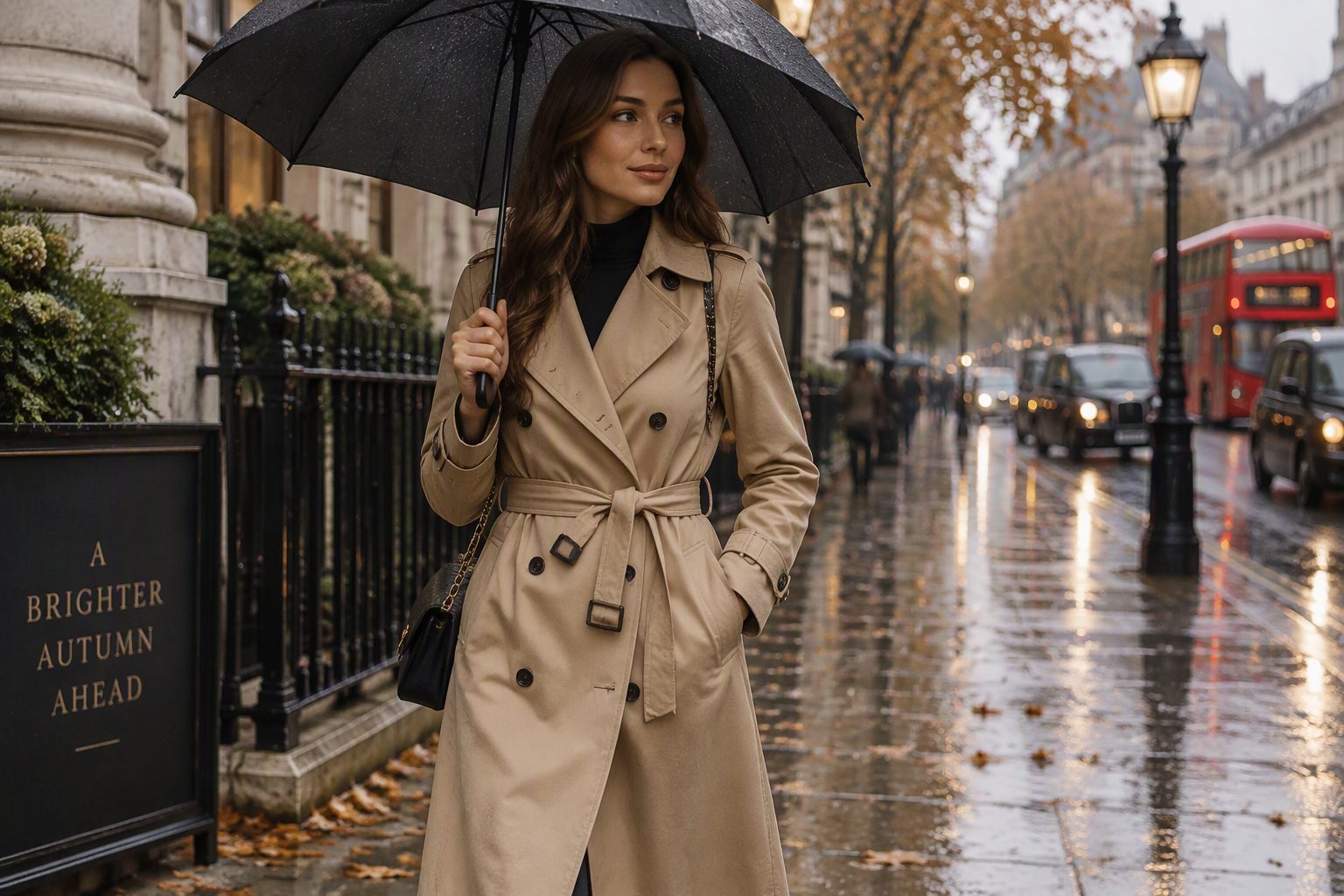
If I had to choose one piece of outerwear that single-handedly elevates every outfit it touches, it would be the trench coat. It works over a suit, a dress, jeans and a t-shirt, a cocktail dress, and even activewear. It’s the piece that says “I know what I’m doing” without saying anything at all.
But not all trenches are created equal. From fabric to length to details, the variables matter. Here’s how to find the perfect trench coat and style it for real life.
The Anatomy of a Trench Coat
A true trench coat has specific features that distinguish it from other coat styles:
- Double-breasted front with six buttons: Two columns of three buttons.
- Storm flap: The extra piece of fabric on the upper back, designed to channel water away from the body.
- Shoulder cape (epaulets in military versions): An extra layer on the shoulders.
- Belt at the waist: Ties the coat closed and defines the waist.
- Cuff straps: Self-belt straps at the wrists.
- Gun flap: The buttoned flap on the right chest.
These details have roots in military history — the trench coat was invented for officers in WWI. The details aren’t just decorative; they each serve a function. The gun flap, for example, was originally designed to pad the coat against rifle recoil.
You don’t need all these details for a coat to be a “trench” — many modern interpretations simplify them. But understanding the anatomy helps you shop thoughtfully.
Choosing the Right Trench
Fabric
The traditional trench coat fabric is cotton gabardine — tightly woven cotton that’s water-resistant, breathable, and holds its shape. This is what you want for a year-round trench. Avoid:
- Fully synthetic fabrics: These don’t breathe and look cheap.
- Heavy wool: Too warm for spring and fall, which is when you’ll want the trench most.
- Polyester blends: They don’t drape the way cotton does and trap heat.
Cotton-poly blends (80/20): A common affordable option that resists wrinkles — reasonable if budget is a concern.
Wool-blend trenches: Best for colder seasons. Not truly year-round.
Length
Trench coats come in several lengths:
- Mini (mid-thigh): Young, modern, easy to move in. Works best with slim bottoms. Good for petite women.
- Knee-length: The classic. The most versatile option for all body types. Elegantly covers the seat and creates a long visual line.
- Midi (mid-calf): Dramatic and editorial. Works best on taller women and pairs beautifully with dresses and skirts.
- Maxi (ankle): Statement-making. Can feel heavy and warm — best reserved for cooler spring days.
My recommendation: Knee-length. If you’re going to own one trench, it should be knee-length. This is the most universally flattering and practical option.
Color
The classic trench color is “khaki” or “sand” — a warm beige. It’s the most versatile color, as it pairs with everything from black to cream to jewel tones.
Other great colors include navy (more formal), black (edgy), olive (autumnal), and grey (minimalist). If you already have a sand-colored trench, a second in one of these alternate colors adds variety.
Avoid bright colors or patterns — the trench should be a neutral, not a statement.
Fit
The trench coat should fit over a sweater or blazer without pulling at the buttons. The shoulder seam should sit at your shoulder, and the sleeves should end at your wrist.
The belt is crucial: When buckled, the belt should create a defined waist — not cinch so tightly that the coat puckers. When unbuckled, the coat should hang open gracefully.
How to Style a Trench Coat
For Work
Over a blouse/blazer and tailored trousers, the trench replaces a winter coat. The key difference is that the trench’s belt creates shape while a puffer coat adds bulk. Belted trench + tailored outfit underneath = polished professional.
For Casual Weekend
Over a t-shirt, jeans, and white sneakers, the trench takes a casual outfit up several notches. Leave it unbelted for ease, or belt it loosely for a more styled attempt. This is the “I threw on a coat” look that street-style photographers love.
For Evening
Over a silk dress or slip skirt and top, the trench coat becomes a layering piece that’s as elegant as the outfit underneath. Belt it snugly at the waist for a more formal silhouette. Ankle boots or strappy sandals complete the look.
For Travel
The trench coat is the ultimate travel layering piece. It’s light enough to fold into your carry-on, warm enough for the plane, and stylish enough to wear straight off the flight. Wear it on the plane — that’s one less thing in your bag.
Styling Tricks for Your Trench
1. The “Belted Without the Belt” Look
If you want a colored waist without actually buckling the belt, try this: Buckle the belt behind your back and let the coat hang open in the front. The attention goes to the belted waistline, and the look is more elegant than a closed front.
2. Sleeve Push
Push the sleeves up to your forearm. It’s a small move that makes the coat look more modern and relaxed — and it’s more comfortable when you’re moving between inside and outside temperatures.
3. Open with Scarf
Leave the trench open and add a colored silk scarf around your neck. The scarf adds color, the trench adds structure, and the open front shows your outfit underneath.
4. Tied Around the Shoulders
When it’s too warm to wear the coat, drape it over your shoulders and tie the sleeves in the front. Parisian effortless, instantly.
How Much to Spend
Trench coats follow the investment piece rule — buy less, buy better. Here’s what you get at each price point:
Under $100
Lightweight cotton-poly blends in solid colors. Good if you’re new to trenches and want to experiment. Quality construction will feel cheap. Worth it for a first-time trial.
$100-$250
The sweet spot. You get decent cotton gabardine (or a high-quality blend), real horn or leather buttons, and a properly constructed storm flap. This is where you find most excellent mid-range brands.
$250-$500
Investment-quality trenches. Full cotton gabardine, well-finished seams, removable linings for cold-weather use. These coats last 10+ years and age beautifully.
$500+
Design and heritage territory. Burberry, Aquascutum, Mackintosh. You’re paying for brand heritage, design history, and premium construction. Worth it if you wear a trench daily and want the real thing.
Trench Care
- Spot clean first. Most trench coats don’t need to be washed frequently. A spot clean with mild soap takes care of small marks.
- Air dry thoroughly after rain. Don’t throw a wet trench in a pile — hang it to dry naturally to prevent mildew.
- Dry clean sparingly. Dry cleaning degrades water-resistant coatings. Have it cleaned once a year, or when visibly dirty.
- Store on a wide hanger. Wire hangers ruin the shoulder shape of a coat. A wooden hanger maintains the structure.
- Re-treat the fabric every few years. Use a spray-on water repellant to refresh the coat’s resistance.
The One Trench to Buy First
If you’re buying your first trench coat and have no idea where to start:
- Color: Khaki/sand
- Length: Knee-length
- Fabric: Cotton gabardine or 80/20 cotton-poly blend
- Details: Double-breasted with a belt (don’t skip the belt)
- Budget: $150-$250
This will serve you for years, in every season, with every outfit. You’ll wear it over workwear, weekend wear, and date-night looks. You’ll pack it for trips and throw it on for errands. You’ll wonder how you ever got dressed without it.
That’s the power of the right trench coat: it doesn’t complete your wardrobe — it amplifies it. Every outfit is better with the right coat on top.